Contaminants
Detection and quantification of chemical, microbial, and environmental contaminants in food products to ensure consumer safety and meet regulatory compliance requirements.
Hydrocarbons in Air
Overview
Melamine (1,3,5-triazine-2,4,6-triamine) is a nitrogen-rich industrial compound illegally added to foods or animal feeds to falsify protein content measurements. Its presence in dairy products, infant formula, and protein powders can lead to serious health risks, including renal damage and urinary stones. Because melamine is chemically stable and non-volatile, sensitive and selective analytical methods are required to detect trace levels—typically in the low µg/kg range. Monitoring melamine and related analogs such as cyanuric acid ensures food safety, regulatory compliance, and protection against food adulteration.
Test Methods
Solutions
Both Gas Chromatography–Mass Spectrometry (GC-MS) and Liquid Chromatography–Mass Spectrometry (LC-MS) are widely employed for melamine analysis, depending on matrix type and required detection limits:
LC-MS / LC-MS/MS:
This is the preferred method due to melamine’s high polarity and thermal instability. Samples are extracted using acetonitrile–water or trichloroacetic acid solutions, followed by cleanup with solid-phase extraction (SPE) or QuEChERS protocols. Using reversed-phase HPLC coupled to tandem MS with electrospray ionization (ESI+), melamine is detected via its characteristic m/z transitions (e.g., 127 → 85). LC-MS/MS offers detection limits as low as 0.1 µg/kg and excellent selectivity in complex food matrices like milk or formula.GC-MS:
Used mainly for confirmatory or comparative testing after chemical derivatization. Melamine is converted to volatile derivatives (e.g., via silylation with BSTFA) before injection into a GC-MS system equipped with a low-polarity column (e.g., 5% phenyl methylpolysiloxane). Electron impact ionization (EI) provides distinctive fragmentation ions for identification. Although less sensitive than LC-MS/MS, GC-MS remains a robust and reproducible method for detecting melamine in processed or high-protein foods.
Both techniques comply with regulatory testing standards such as AOAC 2009.08, ISO 17919:2013, and FDA methods for melamine in foods, ensuring reliable quantification, traceability, and food safety compliance.
Featured GC-MS
Discover a wide range of lab equipment from top manufacturers at SpectraLab. View all to find more GC-MS equipment!
-
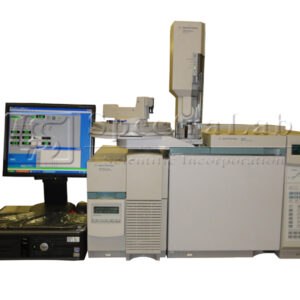
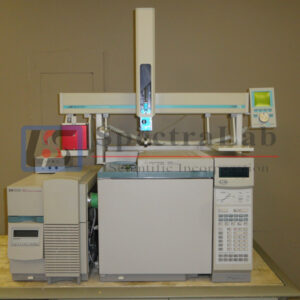
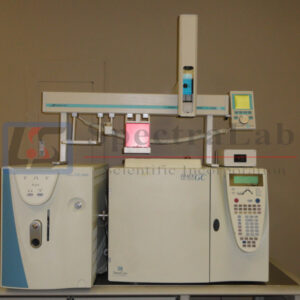
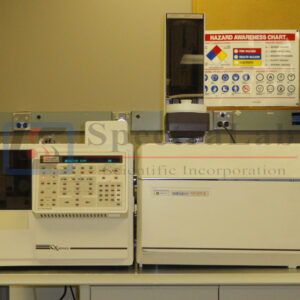
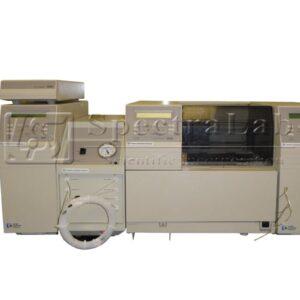
HP 5973 EI/CI MSD G1099A with 6890 Plus GC & CTC Analytics Combi PAL Autosampler
Item ID: RefurbishedIn StockPrice:$25000 USD
-
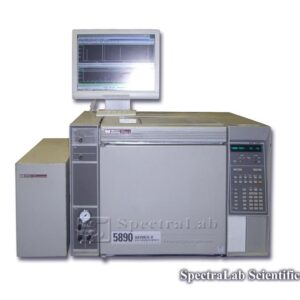
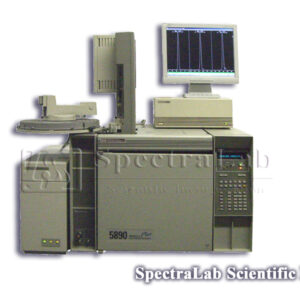
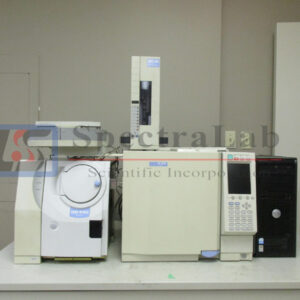
HP 5972 MSD with HP 5890 II GC, HP 7673B Autosampler, Data System and Rough Pump
Item ID: RefurbishedIn Stock
Featured HPLC
Discover a wide range of lab equipment from top manufacturers at SpectraLab. View all to find more HPLC equipment!
-
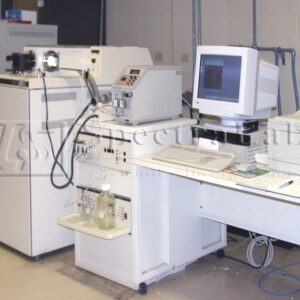
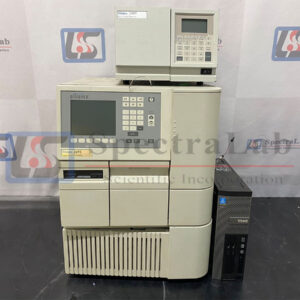
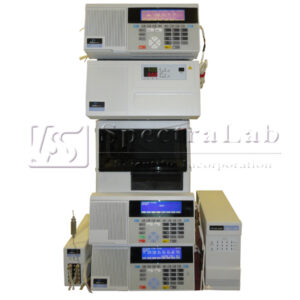
Shimadzu HPLC System with LC-10AD pump, SIL-10AXL Autoinjector and SPD-10A UV/vis Detector
Item ID: RefurbishedIn Stock
Featured LC-MS
Discover a wide range of lab equipment from top manufacturers at SpectraLab. View all to find more LC-MS equipment!
-
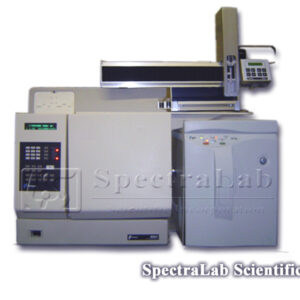
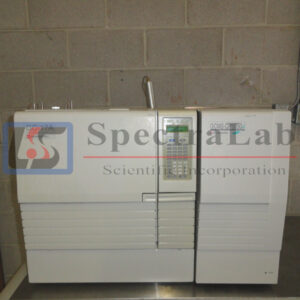
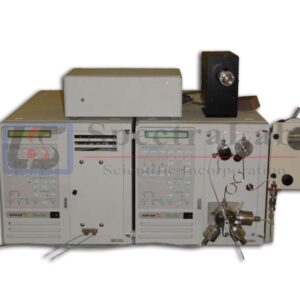
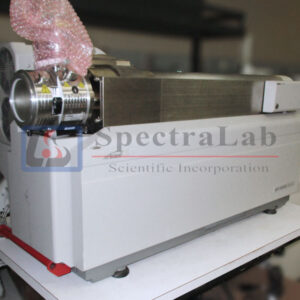
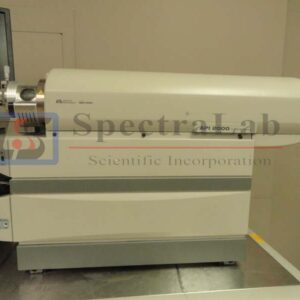
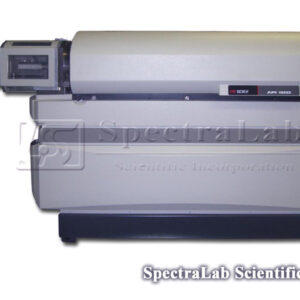
AB Sciex API 3000 LC/MS/MS with Agilent Technologies Turbo V 551 Navigator
Item ID: RefurbishedIn Stock
Multi-residue Analysis of Pesticides in Food
Overview
Pesticide residues in food arise from agricultural and post-harvest treatments designed to protect crops from pests and disease. These residues may include diverse chemical classes such as organochlorines, organophosphates, carbamates, pyrethroids, triazoles, and neonicotinoids. Because even trace amounts can pose health risks, comprehensive multi-residue analysis is essential to evaluate food safety and ensure compliance with international regulatory limits established by organizations such as the EU, Codex Alimentarius, and the U.S. EPA. Accurate and efficient quantification of these compounds allows laboratories to assess contamination, verify compliance, and support sustainable agricultural and trade practices.
Test Methods
–
Solutions
Gas Chromatography coupled with Triple Quadrupole Mass Spectrometry (GC/MS/MS) provides a highly sensitive and selective solution for detecting and quantifying pesticide residues in food matrices. Using the QuEChERS extraction method, pesticides are efficiently isolated from complex food matrices with minimal sample preparation. The purified extracts are analyzed on a low-bleed capillary column under temperature programming, with detection carried out in Multiple Reaction Monitoring (MRM) mode to ensure compound-specific accuracy. Calibration with matrix-matched standards compensates for interferences, achieving detection limits in the sub-ppb range. GC/MS/MS delivers rapid, precise, and reproducible results, enabling simultaneous identification and quantification of hundreds of pesticide residues in compliance with AOAC and SANTE/11312/2021 guidelines.
Featured GC-MS
Discover a wide range of lab equipment from top manufacturers at SpectraLab. View all to find more GC-MS equipment!
-
HP 5973 EI/CI MSD G1099A with 6890 Plus GC & CTC Analytics Combi PAL Autosampler
Item ID: RefurbishedIn StockPrice:$25000 USD
-
HP 5972 MSD with HP 5890 II GC, HP 7673B Autosampler, Data System and Rough Pump
Item ID: RefurbishedIn Stock
SpectraLab Scientific Inc
Established in 2003,
SpectraLab Scientific is a global leader of Refurbished analytical equipment. We specialize in reconditioning equipment, integrating the best available technologies from leading manufacturers across the industry. We are committed to quality and service, delivering strong customer satisfaction. We stock over 10,000 pre-owned lab equipment, components, and mix-and-match parts for your systems.