Inorganic Chemical
Inorganic chemicals, including salts, acids, bases, and metal compounds, form the foundation of many industrial and laboratory processes. Their analysis focuses on purity, elemental composition, and trace contamination to ensure performance and safety.
Inorganic Anions and Organic Acids in Broths
Overview
Inorganic anions and organic acids play critical roles in fermentation processes, influencing microbial growth, metabolic activity, and overall product yield. Monitoring these components provides valuable insight into fermentation efficiency, nutrient utilization, and byproduct formation. Accurate quantification of species such as chloride, sulfate, phosphate, lactate, acetate, and succinate is essential for optimizing fermentation conditions, ensuring product consistency, and supporting process control in biotechnological and pharmaceutical production.
Test Methods
Solutions
High-Performance Liquid Chromatography (HPLC) using anion-exchange chromatography offers a reliable and precise approach for the determination of inorganic anions and organic acids in fermentation broths. The technique separates ionic species based on charge interactions with the stationary phase, while conductivity or UV detection provides quantitative measurement. HPLC anion-exchange chromatography delivers excellent resolution, sensitivity, and reproducibility, allowing simultaneous detection of multiple anions and organic acids. This method supports efficient monitoring and optimization of fermentation processes in industrial and research applications.
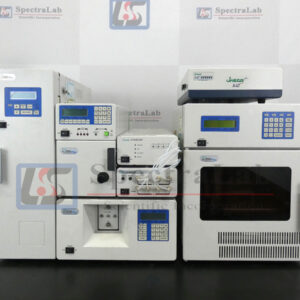
Featured HPLC-AEC
Discover a wide range of lab equipment from top manufacturers at SpectraLab. View all to find more HPLC-AEC equipment!
Alkaline Earth Cations
Overview
Formaldehyde is a volatile organic compound (VOC) widely used in industrial processes such as resin production, textiles, and coatings, and it is also emitted from building materials, combustion sources, and various consumer products. Due to its toxicity, irritant properties, and classification as a human carcinogen, monitoring formaldehyde in air is essential for occupational safety, indoor air quality assessment, and regulatory compliance. Because formaldehyde is highly reactive and typically present at low concentrations, accurate and sensitive analytical methods are required to quantify it reliably in complex air matrices.
Test Methods
Solutions
High-Performance Liquid Chromatography with Ultraviolet detection (HPLC-UV) provides an effective method for the separation and quantification of alkaline earth cations after complexation with UV-active reagents. Using ion-pair or chelation chromatography, the cations can be resolved based on their interaction with the stationary phase and detected with high sensitivity. HPLC-UV offers excellent precision, reproducibility, and selectivity, making it a reliable technique for routine analysis of multivalent cations in diverse sample matrices.
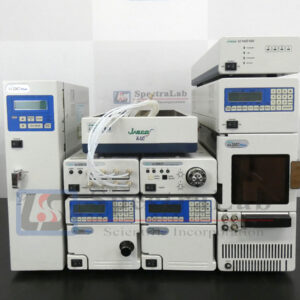
Featured HPLC-UV
Discover a wide range of lab equipment from top manufacturers at SpectraLab. View all to find more HPLC-UV equipment!
-
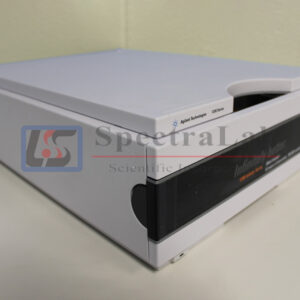
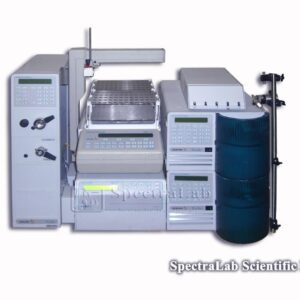
Waters Acquity UPLC System with ACQUITY UPLC TUV Detector, PDA Detector,FLR Detector
Item ID: RefurbishedIn Stock -
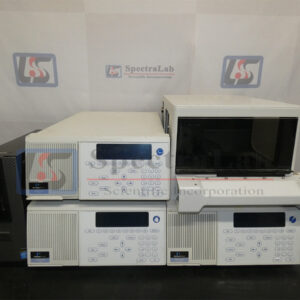
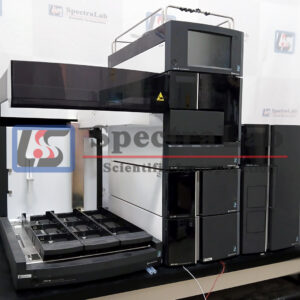
Waters HPLC system with 1525 Binary Pump, 717 Plus Autosampler, 2487 UV/Vis, 474 FLD or 2996 PDA
Item ID: RefurbishedIn StockPrice:$12000 USD
-
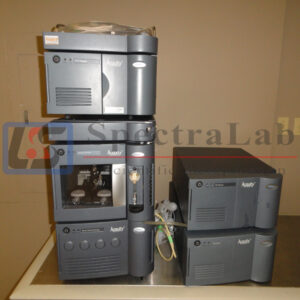
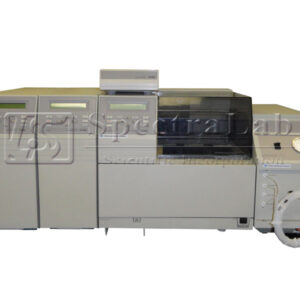
Waters Alliance 2690/2695 HPLC system with Waters 996 PDA
Item ID: RefurbishedIn StockPrice:$12000 USD
-
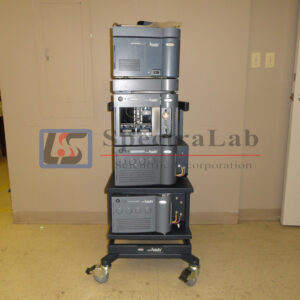
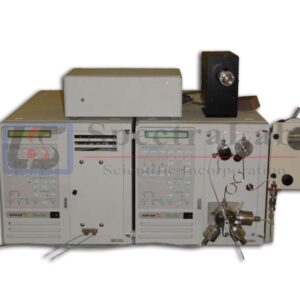
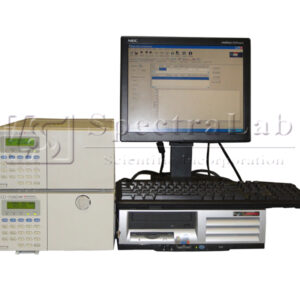
Varian ProStar Prep HPLC System with 345 UV/VIS Detector
Item ID: RefurbishedIn StockPrice:$8500 USD
-
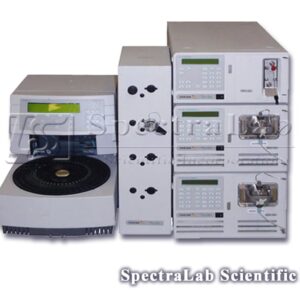
Shimadzu VP Basic Manual HPLC with SPD-10A Uv/Vis Detector and LC-10AD pump
Item ID: RefurbishedIn Stock
-
Jasco LC-2000Plus HPLC System with FP-2020Plus Intelligent Fluorescence Detector
Item ID: RefurbishedIn Stock -
Jasco LC-2000Plus HPLC System with UV-2075Plus Intelligent UV-Vis Detector
Item ID: RefurbishedIn Stock
-
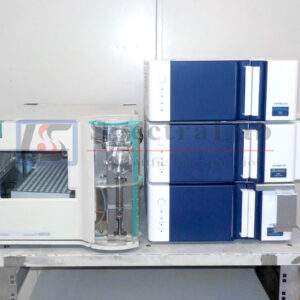
Hitachi Chromaster HPLC System, includes 5430 DAD, 5310 Column Oven, 5160 Pump, and Autosampler
Item ID: RefurbishedOn Backorder
Inorganic Anions in Water
Overview
Inorganic anions such as chloride, nitrate, sulfate, and phosphate are key indicators of water quality and environmental health. Their concentrations reflect natural geochemical processes as well as anthropogenic influences like agricultural runoff, industrial discharge, and urban wastewater. Accurate determination of these ions is essential for regulatory compliance, pollution assessment, and maintaining safe water supplies in environmental monitoring programs.
Test Methods
Solutions
High-Performance Liquid Chromatography (HPLC) using ion chromatography is a precise and efficient method for determining inorganic anions in environmental water samples. The technique separates ions based on their affinity to an ion-exchange resin, followed by detection through conductivity or UV systems. HPLC ion chromatography offers excellent sensitivity, selectivity, and reproducibility, allowing simultaneous quantification of multiple anions at trace levels. This approach supports reliable monitoring of water quality and compliance with environmental standards.
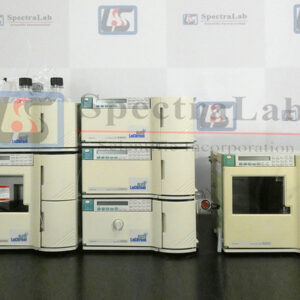
Featured HPLC-IC
Discover a wide range of lab equipment from top manufacturers at SpectraLab. View all to find more HPLC-IC equipment!
Lead and Cadmium in plastic
Overview
Lead and cadmium are toxic heavy metals commonly monitored in plastic materials due to their potential health and environmental hazards. These elements may be introduced during manufacturing as stabilizers, pigments, or contaminants, and their presence is strictly regulated under international safety standards such as RoHS and REACH. Accurate determination of lead and cadmium is essential to ensure product safety, regulatory compliance, and environmental responsibility in plastic production and recycling.
Test Methods
–
Solutions
Atomic Absorption Spectroscopy (AA) provides a reliable and sensitive method for quantifying trace levels of lead and cadmium in plastic materials. Samples are typically digested using acid decomposition to release metal ions, which are then atomized and measured based on their characteristic absorption wavelengths. AA offers excellent accuracy, precision, and detection limits for heavy metal analysis, making it ideal for routine quality control and regulatory testing of polymer-based products.
Low Levels of Antimony in Steel
Overview
Antimony is a trace element that can influence the mechanical and corrosion properties of carbon and low-alloy steels. Even at low concentrations, it may affect steel performance, weldability, and brittleness. Accurate determination of antimony content is therefore critical in metallurgical quality control and material certification to ensure compliance with industry specifications and performance standards.
Test Methods
ASTM E1852-13
Solutions
The Standard Test Method for Determination of Low Levels of Antimony in Carbon and Low-Alloy Steel by Graphite Furnace Atomic Absorption Spectrometry (GFAAS) provides a highly sensitive and precise approach for trace metal analysis. In this method, steel samples are digested in acid, and the resulting solution is analyzed using GFAAS, where antimony atoms are quantified based on their specific absorption wavelength. The graphite furnace enhances detection capability for ultra-trace concentrations, offering excellent accuracy, reproducibility, and compliance with metallurgical testing requirements.
Silver in Copper Concentrates
Overview
Silver is a valuable trace metal often present in copper concentrates, where its accurate quantification is important for process control, metallurgical accounting, and economic valuation. Determining silver content ensures proper recovery efficiency in smelting and refining operations and helps verify product quality against industry and trade specifications. Reliable analysis of silver at trace to moderate levels is therefore essential in the mining and metallurgical sectors.
Test Methods
ASTM E1898-13
Solutions
The Standard Test Method for Determination of Silver in Copper Concentrates by Flame Atomic Absorption Spectrometry (FAAS) provides a straightforward and precise procedure for measuring silver concentration. In this method, samples are digested in acid to dissolve metallic components, and the resulting solution is aspirated into a flame where silver atoms absorb light at a characteristic wavelength. FAAS offers excellent sensitivity, precision, and reproducibility for silver determination, making it an efficient and cost-effective technique for routine analysis in mineral processing and quality control laboratories.
Argon Concentration in Insulating Glass Units
Overview
Argon gas is commonly used as an insulating filler in multi-pane glass units to enhance thermal efficiency and reduce heat transfer. Over time, argon concentration within the sealed unit can decrease due to diffusion or leakage, compromising insulation performance. Accurate determination of argon concentration is therefore essential for quality assurance during manufacturing and for evaluating the integrity and long-term performance of insulating glass systems.
Test Methods
ASTM E2269-05
Solutions
The Standard Test Method for Determining Argon Concentration in Sealed Insulating Glass Units using Gas Chromatography with Thermal Conductivity Detection (GC-TCD) provides a precise and non-destructive approach for gas composition analysis. In this method, a small gas sample is extracted from the sealed unit and introduced into a gas chromatograph, where argon is separated from other atmospheric gases and quantified by its thermal conductivity response. GC-TCD offers high accuracy, reproducibility, and sensitivity, making it an ideal technique for verifying gas fill levels and ensuring compliance with energy efficiency and manufacturing standards.
Inorganic Gas
Overview
Inorganic gases such as hydrogen, oxygen, nitrogen, carbon monoxide, carbon dioxide, and sulfur-containing species play critical roles in industrial processes, environmental monitoring, and safety assessments. Accurate identification and quantification of these gases are essential for evaluating air quality, combustion efficiency, process control, and potential toxicity. Because many inorganic gases are colorless, odorless, and reactive, sensitive and selective analytical techniques are required to ensure reliable detection.
Test Methods
Solutions
Gas Chromatography–Mass Spectrometry (GC-MS) provides a powerful and versatile platform for the analysis of inorganic gases in complex mixtures. The gas chromatograph separates individual components based on volatility and interaction with the stationary phase, while the mass spectrometer identifies and quantifies them through characteristic mass-to-charge ratios. GC-MS offers high sensitivity, selectivity, and precision for both qualitative and quantitative analysis. This method enables comprehensive profiling of inorganic gases across environmental, industrial, and research applications, supporting accurate process evaluation and regulatory compliance.
Featured GC-MS
Discover a wide range of lab equipment from top manufacturers at SpectraLab. View all to find more GC-MS equipment!
-
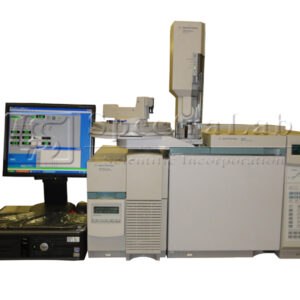
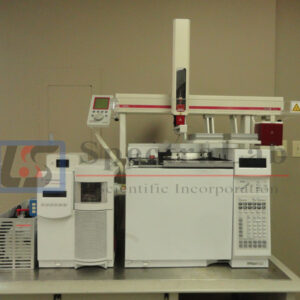
HP 5973 EI/CI MSD G1099A with 6890 Plus GC & CTC Analytics Combi PAL Autosampler
Item ID: RefurbishedIn StockPrice:$25000 USD
-
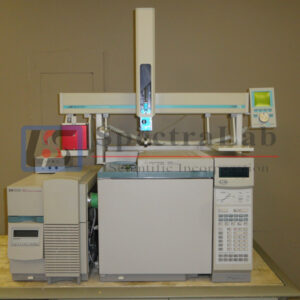
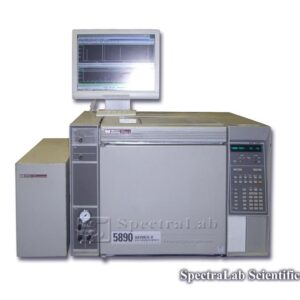
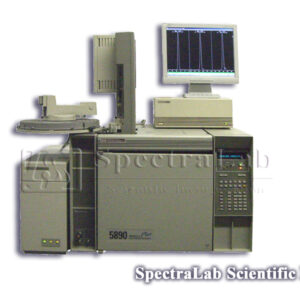
HP 5972 MSD with HP 5890 II GC, HP 7673B Autosampler, Data System and Rough Pump
Item ID: RefurbishedIn Stock
SpectraLab Scientific Inc
Established in 2003,
SpectraLab Scientific is a global leader of Refurbished analytical equipment. We specialize in reconditioning equipment, integrating the best available technologies from leading manufacturers across the industry. We are committed to quality and service, delivering strong customer satisfaction. We stock over 10,000 pre-owned lab equipment, components, and mix-and-match parts for your systems.