Air / Gas / Process Emission Monitoring
Measurement of gaseous pollutants, hydrocarbons, and industrial process emissions to track air quality and ensure compliance with environmental regulations.
Hydrocarbons in Air
Overview
Hydrocarbons ranging from light gases such as acetylene to heavier aromatic compounds like trimethylbenzene are key constituents of ambient air pollution. These compounds originate from various sources, including vehicle exhaust, industrial emissions, fuel evaporation, and combustion processes. Monitoring hydrocarbons in ambient air is essential for understanding photochemical smog formation, assessing air quality, and evaluating compliance with environmental regulations. Because these compounds span a wide range of volatilities and chemical structures, analytical methods must provide both sensitivity and selectivity to accurately identify and quantify individual hydrocarbons present at trace concentrations.
Test Methods
EPA Method 8041A
ASTM D6142-12 (by GC-FID)
Solutions
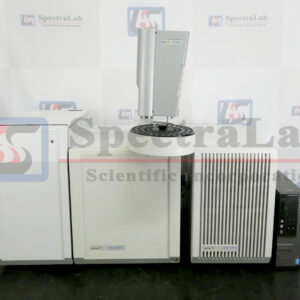
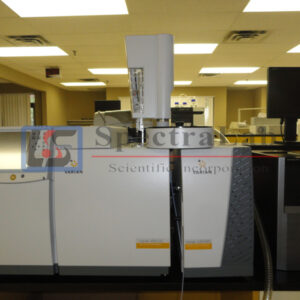
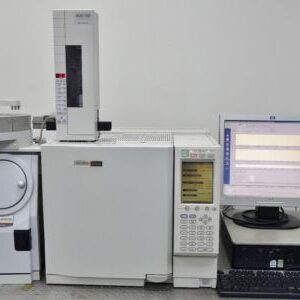
Gas Chromatography with Flame Ionization Detection (GC-FID) and Gas Chromatography–Mass Spectrometry (GC-MS) are widely used complementary techniques for the measurement of hydrocarbons in ambient air. Air samples are typically collected using canisters, adsorbent tubes, or cryogenic trapping, then introduced into the GC system for separation based on volatility and polarity. GC-FID offers robust quantification with excellent sensitivity for total hydrocarbon analysis, while GC-MS provides molecular identification and confirmation through characteristic mass spectra. Modern GC systems equipped with capillary columns, automated sample introduction, and precise temperature control ensure high-resolution separation and reproducible results. The combined use of GC-FID and GC-MS enables comprehensive, accurate monitoring of hydrocarbons in ambient air across a broad concentration and molecular weight range.
Featured GC-FID
Discover a wide range of lab equipment from top manufacturers at SpectraLab. View all to find more GC-FID equipment!
-
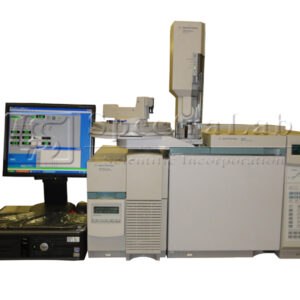
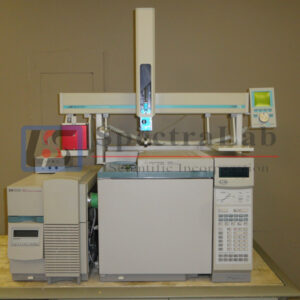
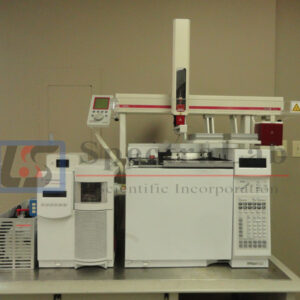
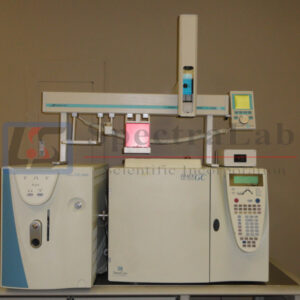
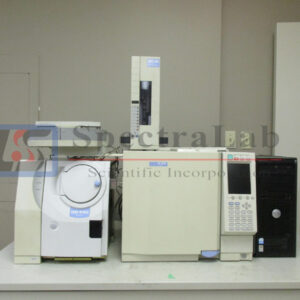
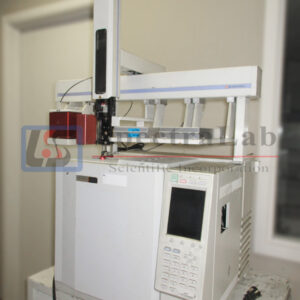
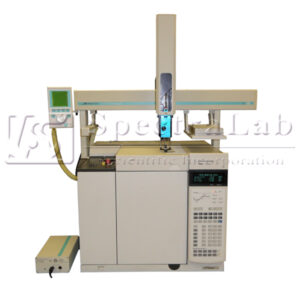
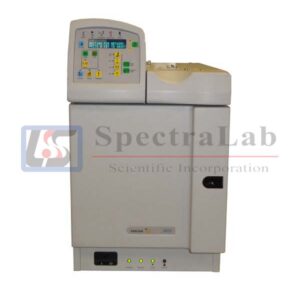
Agilent 6890 GC with FID/ECD or NPD, Agilent G1512A Controller and Agilent 6890 Auto Injector
Item ID: RefurbishedIn Stock -
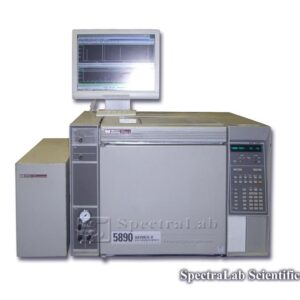
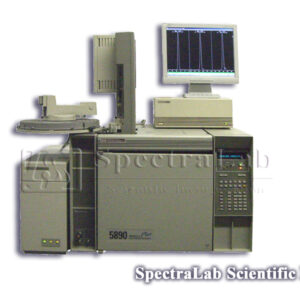
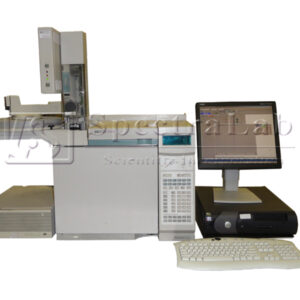
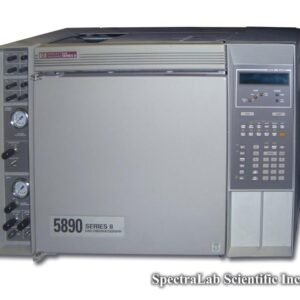
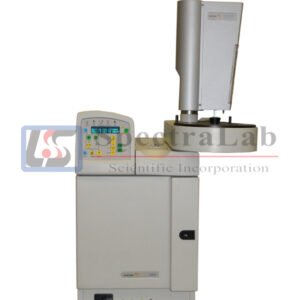
HP 5890 II GC with Dual FIDs, Split/splitless Inlet and Purged Packed Inlet
Item ID: RefurbishedIn Stock
Formaldehyde in Air Analysis
Overview
Formaldehyde is a volatile organic compound (VOC) widely used in industrial processes such as resin production, textiles, and coatings, and it is also emitted from building materials, combustion sources, and various consumer products. Due to its toxicity, irritant properties, and classification as a human carcinogen, monitoring formaldehyde in air is essential for occupational safety, indoor air quality assessment, and regulatory compliance. Because formaldehyde is highly reactive and typically present at low concentrations, accurate and sensitive analytical methods are required to quantify it reliably in complex air matrices.
Test Methods
Solutions
High-Performance Liquid Chromatography with Ultraviolet Detection (HPLC-UV) provides a precise and sensitive technique for determining formaldehyde in air samples. Airborne formaldehyde is first collected by drawing air through an absorbent solution—commonly containing 2,4-dinitrophenylhydrazine (DNPH)—which reacts with formaldehyde to form a stable hydrazone derivative. The derivative is then separated by HPLC and detected using UV absorbance, typically around 360 nm. This method offers excellent specificity, stability, and quantification accuracy, even at trace levels. Modern HPLC systems equipped with autosamplers, precise gradient control, and high-sensitivity detectors ensure reproducible and reliable results, making HPLC-UV a standard method for formaldehyde monitoring in ambient and indoor air environments.
Featured HPLC-UV
Discover a wide range of lab equipment from top manufacturers at SpectraLab. View all to find more HPLC-UV equipment!
-
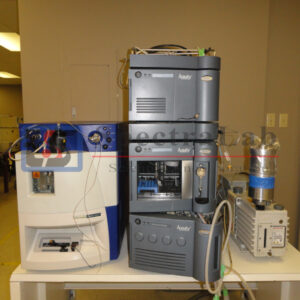
Waters Acquity UPLC System with ACQUITY UPLC TUV Detector, PDA Detector,FLR Detector
Item ID: RefurbishedIn Stock -
Waters HPLC system with 1525 Binary Pump, 717 Plus Autosampler, 2487 UV/Vis, 474 FLD or 2996 PDA
Item ID: RefurbishedIn StockPrice:$12000 USD
-
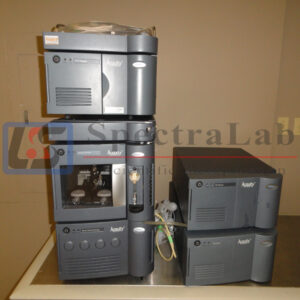
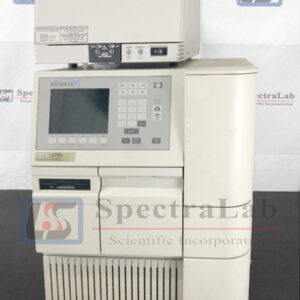
Waters Alliance 2690/2695 HPLC system with Waters 996 PDA
Item ID: RefurbishedIn StockPrice:$12000 USD
-
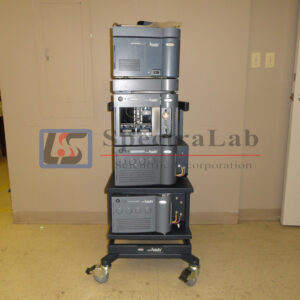
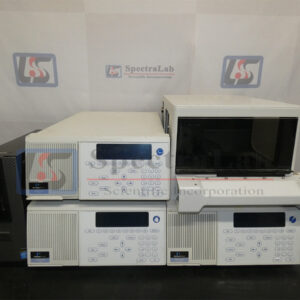
Varian ProStar Prep HPLC System with 345 UV/VIS Detector
Item ID: RefurbishedIn StockPrice:$8500 USD
-
Shimadzu VP Basic Manual HPLC with SPD-10A Uv/Vis Detector and LC-10AD pump
Item ID: RefurbishedIn Stock
-
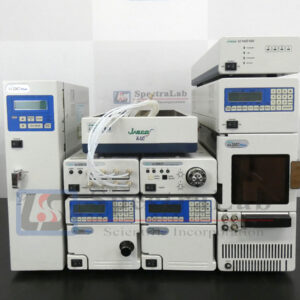
Jasco LC-2000Plus HPLC System with FP-2020Plus Intelligent Fluorescence Detector
Item ID: RefurbishedIn Stock -
Jasco LC-2000Plus HPLC System with UV-2075Plus Intelligent UV-Vis Detector
Item ID: RefurbishedIn Stock
-
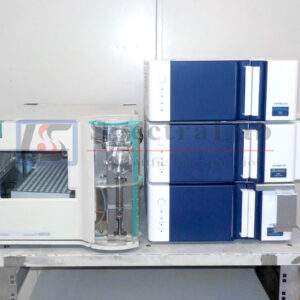
Hitachi Chromaster HPLC System, includes 5430 DAD, 5310 Column Oven, 5160 Pump, and Autosampler
Item ID: RefurbishedOn Backorder
Sampling of Process Vents
Overview
Process vents in industrial operations can emit a wide range of gaseous compounds, including hydrocarbons, halogenated organics, oxygenates, and other volatile substances. These emissions can originate from chemical production, petrochemical refining, or waste treatment processes and may contribute to air pollution, safety hazards, and regulatory non-compliance if not properly controlled. Accurate sampling and analysis of process vent gases are essential for characterizing emission profiles, ensuring process efficiency, and verifying compliance with environmental standards. Because process vents may contain a complex mixture of gases at varying concentrations, analytical methods must be capable of detecting both major and trace components with high sensitivity and selectivity.
Test Methods
ASTM D6060-96
Solutions
Gas Chromatography (GC) equipped with multiple detectors—such as Thermal Conductivity Detector (TCD), Argon Ionization Detector (AID), Electron Capture Detector (ECD), and Photoionization Detector (PID)—provides a comprehensive analytical approach for process vent sampling. Each detector offers unique advantages: TCD for general-purpose detection of inorganic and permanent gases; AID and PID for sensitive detection of organic vapors and hydrocarbons; and ECD for selective measurement of halogenated and electronegative compounds. Samples are typically collected using gas sampling bags, canisters, or direct injection systems to preserve composition. Modern GC systems with multi-detector configurations, precise flow and temperature control, and automated data acquisition allow simultaneous or sequential analysis of complex gas mixtures. This integrated approach ensures accurate, sensitive, and reproducible monitoring of process vent emissions across a broad range of compounds and concentration levels.
Featured GC
Discover a wide range of lab equipment from top manufacturers at SpectraLab. View all to find more GC equipment!
-
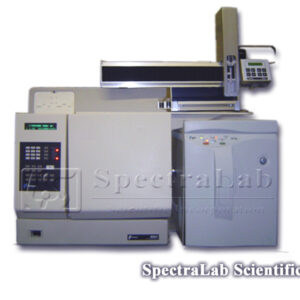
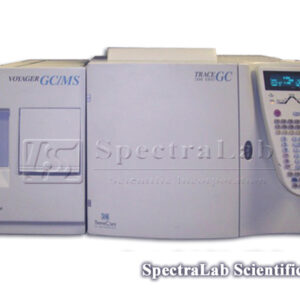
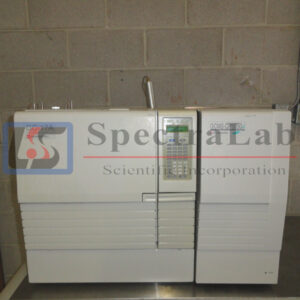
HP 5973 EI/CI MSD G1099A with 6890 Plus GC & CTC Analytics Combi PAL Autosampler
Item ID: RefurbishedIn StockPrice:$25000 USD
-
HP 5972 MSD with HP 5890 II GC, HP 7673B Autosampler, Data System and Rough Pump
Item ID: RefurbishedIn Stock
Argon, Oxygen and Nitrogen
Overview
Argon, oxygen, and nitrogen are the main components of air and play important roles in many industries. Argon is an inert gas often used in welding and as a protective atmosphere for sensitive materials. Oxygen is essential for combustion and biological processes, while nitrogen is widely used as an inert or carrier gas in manufacturing and research. Measuring their concentrations accurately is important for applications in gas production, environmental testing, and industrial quality control, where the right gas balance ensures safety and process efficiency.
Test Methods
–
Solutions
Gas Chromatography with a Thermal Conductivity Detector (GC-TCD) is a reliable technique for separating and measuring argon, oxygen, and nitrogen. In this method, the gases are first separated in a GC column and then detected by the TCD, which senses changes in thermal conductivity between the carrier gas and the analytes. Using high-quality columns, pure carrier gases, and stable temperature control helps achieve precise and consistent results. These equipment solutions make it possible to accurately determine gas compositions, ensuring dependable performance in both research and industrial settings.
Featured GC-TCD
Discover a wide range of lab equipment from top manufacturers at SpectraLab. View all to find more GC-TCD equipment!
-
HP 5973 EI/CI MSD G1099A with 6890 Plus GC & CTC Analytics Combi PAL Autosampler
Item ID: RefurbishedIn StockPrice:$25000 USD
-
HP 5972 MSD with HP 5890 II GC, HP 7673B Autosampler, Data System and Rough Pump
Item ID: RefurbishedIn Stock
Optimizing GC Analysis of Ethylene
Overview
Dioctyl sulfosuccinate (DOSS) is an anionic surfactant commonly used as a dispersing agent, wetting agent, and emulsifier in industrial and environmental applications. It gained particular attention as a major component of oil spill dispersants, such as those used in marine remediation efforts. Due to its surface-active properties and persistence, DOSS can remain in aquatic environments and may pose risks to marine organisms. Monitoring its concentration in seawater is essential for evaluating environmental impact, understanding dispersion behavior, and ensuring compliance with environmental quality standards.
Test Methods
Solutions
Liquid chromatography coupled with tandem mass spectrometry (LC/MS/MS) offers a highly sensitive and selective method for determining DOSS in seawater. Samples are typically filtered and extracted using solid-phase extraction (SPE) to concentrate the analyte and remove salts and organic interferences. Reversed-phase LC, often using a C18 column, provides effective separation, while the MS/MS detector identifies and quantifies DOSS based on specific precursor-to-product ion transitions under negative electrospray ionization (ESI−). Internal standards and matrix-matched calibration are employed to correct for matrix effects and ensure accuracy. This method provides excellent sensitivity, reproducibility, and specificity, making LC/MS/MS a robust tool for trace-level monitoring of DOSS in marine environments.
Featured GC-FID
Discover a wide range of lab equipment from top manufacturers at SpectraLab. View all to find more LC equipment!
-
Waters HPLC system with 1525 Binary Pump, 717 Plus Autosampler, 2487 UV/Vis, 474 FLD or 2996 PDA
Item ID: RefurbishedIn StockPrice:$12000 USD
-
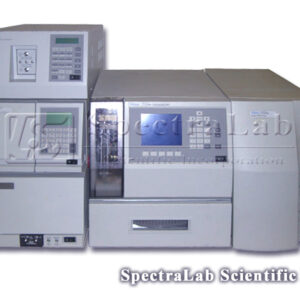
Waters Alliance 2690/2695 HPLC system with Waters 996 PDA
Item ID: RefurbishedIn StockPrice:$12000 USD
-
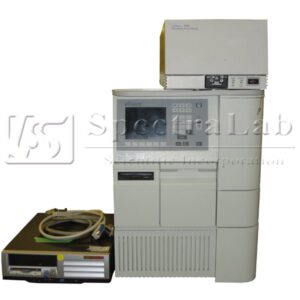
Varian ProStar Prep HPLC System with 345 UV/VIS Detector
Item ID: RefurbishedIn StockPrice:$8500 USD
-
Shimadzu VP Basic Manual HPLC with SPD-10A Uv/Vis Detector and LC-10AD pump
Item ID: RefurbishedIn Stock
Featured LC-MS-MS
Discover a wide range of lab equipment from top manufacturers at SpectraLab. View all to find more LC equipment!
-
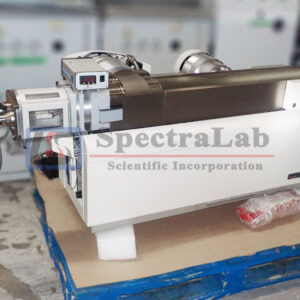
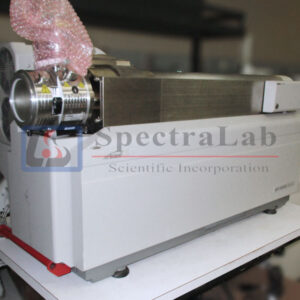
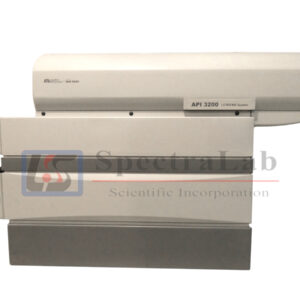
AB Sciex API 3000 LC/MS/MS System with Turbo Ionspray, & Turbo V Ion Source
Item ID: RefurbishedIn Stock -
AB Sciex 2000 QTRAP LC/MS/MS with Nano Spray Probe (Video Cameras) and LC Packings Nano HPLC
Item ID: RefurbishedIn Stock
Benzene in Spark-Ignition Engine Fuels
Overview
Benzene is an aromatic hydrocarbon commonly found in spark-ignition engine fuels such as gasoline. While it contributes to fuel’s octane rating, benzene is also a known carcinogen and poses environmental and health risks. Because of this, regulatory agencies strictly limit its concentration in fuels. Accurate determination of benzene levels is therefore essential to ensure compliance with fuel quality standards, protect public health, and minimize harmful emissions during fuel combustion.
Test Methods
ASTM D6277-07
Solutions
Fourier Transform Infrared Spectroscopy (FTIR) provides a fast and reliable method for determining benzene in fuel samples. FTIR works by measuring the infrared absorption of molecular vibrations that are unique to benzene, allowing direct quantification without complex sample preparation. With proper calibration and background correction, modern FTIR systems can accurately detect benzene even at low concentrations. This technique offers advantages such as rapid analysis, minimal chemical waste, and high reproducibility, making it ideal for routine quality control and regulatory testing in the petroleum industry.
Featured FTIR
Discover a wide range of lab equipment from top manufacturers at SpectraLab. View all to find more FTIR equipment!
-
HP 5973 EI/CI MSD G1099A with 6890 Plus GC & CTC Analytics Combi PAL Autosampler
Item ID: RefurbishedIn StockPrice:$25000 USD
-
HP 5972 MSD with HP 5890 II GC, HP 7673B Autosampler, Data System and Rough Pump
Item ID: RefurbishedIn Stock
Benzene in Hydrocarbon Solvents
Overview
Benzene is a volatile aromatic compound often present as a trace contaminant in hydrocarbon solvents such as toluene, xylene, and hexane. Even at very low levels, benzene poses serious health and safety concerns due to its toxicity and carcinogenic nature. Monitoring benzene concentration in solvents is therefore essential for ensuring product purity, regulatory compliance, and worker safety in chemical manufacturing, laboratory, and industrial applications.
Test Methods
ASTM D6229-06
Solutions
Gas Chromatography with Flame Ionization Detection (GC-FID) is a highly sensitive and accurate technique for measuring trace levels of benzene in hydrocarbon solvents. The GC separates benzene from other components based on their volatility and interaction with the column, while the FID detects organic compounds through ionization in a hydrogen-air flame. This combination provides excellent selectivity, low detection limits, and reproducible quantification. With proper calibration and high-purity carrier gases, GC-FID offers a dependable solution for quality control and trace contaminant analysis in petroleum and chemical products.
Featured GC-FID
Discover a wide range of lab equipment from top manufacturers at SpectraLab. View all to find more GC-FID equipment!
-
HP 5973 EI/CI MSD G1099A with 6890 Plus GC & CTC Analytics Combi PAL Autosampler
Item ID: RefurbishedIn StockPrice:$25000 USD
SpectraLab Scientific Inc
Established in 2003,
SpectraLab Scientific is a global leader of Refurbished analytical equipment. We specialize in reconditioning equipment, integrating the best available technologies from leading manufacturers across the industry. We are committed to quality and service, delivering strong customer satisfaction. We stock over 10,000 pre-owned lab equipment, components, and mix-and-match parts for your systems.