Crude & Petroleum Fractions
Characterization of crude oil, refined petroleum fractions, and process intermediates for composition, contaminants, and quality assurance. Analytical testing supports process optimization, product certification, and regulatory compliance.
Crude Oil
Overview
Crude oil is composed of a wide range of hydrocarbon analytes, including paraffins, olefins, naphthenes, and aromatic compounds spanning from light volatile gases (C1–C4) to heavy fractions (C30+). It also contains trace components such as sulfur- and nitrogen-containing organics, resins, and asphaltenes, which influence viscosity, density, and refining characteristics. Accurate characterization of these analytes is essential for determining crude type, refining yield, combustion behavior, and environmental impact.
Test Methods
ASTM D7169-XX
Solutions
Gas Chromatography with Flame Ionization Detection (GC-FID) is a key instrument for analyzing hydrocarbon composition in crude oil. Its high sensitivity to carbon–hydrogen bonds allows precise quantification of individual hydrocarbons across a wide dynamic range. Using non-polar capillary columns and temperature programming, GC-FID effectively separates complex mixtures into distinct hydrocarbon groups. Automated injection systems ensure reproducible sample introduction, while FID response provides accurate quantification based on carbon content. When integrated with simulated distillation or retention indexing software, GC-FID delivers detailed compositional profiles that support process optimization, blending control, and regulatory compliance in petroleum laboratories.
Featured GC-FID
Discover a wide range of lab equipment from top manufacturers at SpectraLab. View all to find more GC-FID equipment!
-
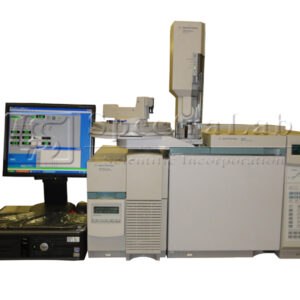
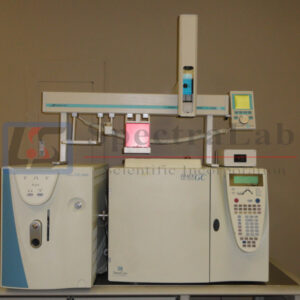
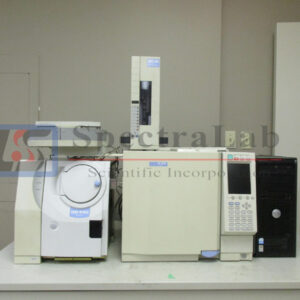
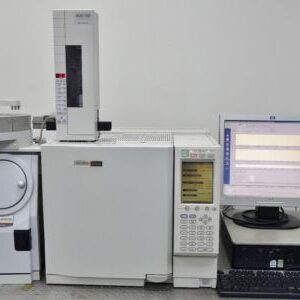
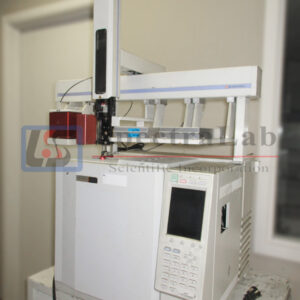
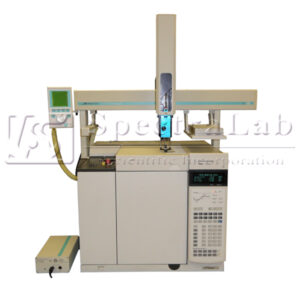
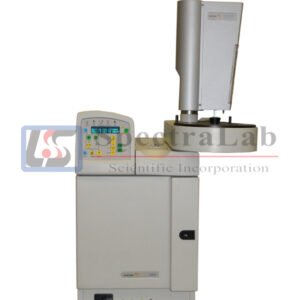
Agilent 6890 GC with FID/ECD or NPD, Agilent G1512A Controller and Agilent 6890 Auto Injector
Item ID: RefurbishedIn Stock -
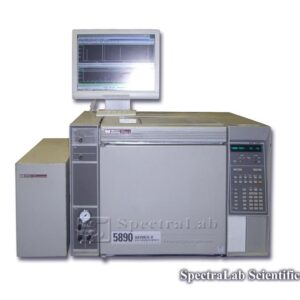
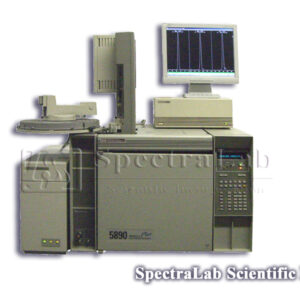
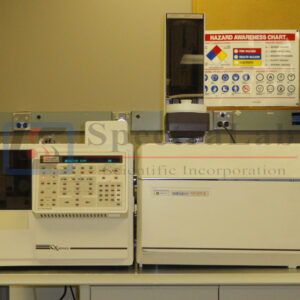
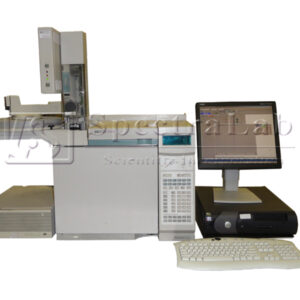
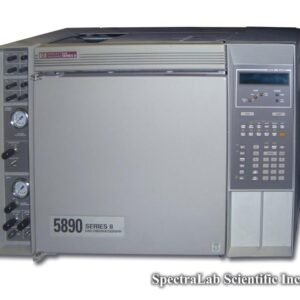
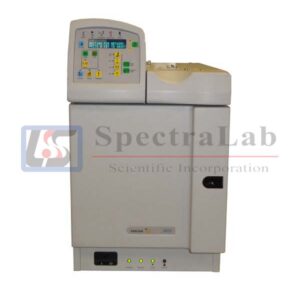
HP 5890 II GC with Dual FIDs, Split/splitless Inlet and Purged Packed Inlet
Item ID: RefurbishedIn Stock
Light Crude Oil
Overview
Light crude oil primarily consists of low-boiling hydrocarbons—straight-chain alkanes, cycloalkanes, and aromatic compounds ranging from C5 to about C20. These lighter fractions determine the crude’s volatility, viscosity, and economic value, yielding higher proportions of gasoline, naphtha, and jet fuel. Accurate analysis of these analytes is essential to assess hydrocarbon distribution, impurity content, and chemical fingerprinting for source identification or blending optimization. Trace components such as sulfur- and nitrogen-containing organics, as well as oxygenates, also influence refining behavior and environmental emissions.
Test Methods
Solutions
Gas Chromatography–Mass Spectrometry (GC-MS) is a powerful technique for identifying and quantifying the individual hydrocarbon species and trace compounds within light crude oil. The GC separates complex mixtures into discrete chemical components based on volatility and polarity, while the mass spectrometer provides molecular identification through fragmentation patterns and accurate mass detection. Using non-polar columns (e.g., 5% phenyl methylpolysiloxane), GC-MS can resolve n-alkanes, isoalkanes, aromatics, and light biomarkers with high sensitivity. Automated sample introduction systems ensure consistent injection, and data processing software enables compound identification via spectral libraries. GC-MS is especially valuable for characterizing volatile fractions, detecting trace sulfur or nitrogen species, and generating compositional fingerprints that support quality assurance, process control, and crude source tracking.
Featured GC-MS
Discover a wide range of lab equipment from top manufacturers at SpectraLab. View all to find more GC-MS equipment!
-
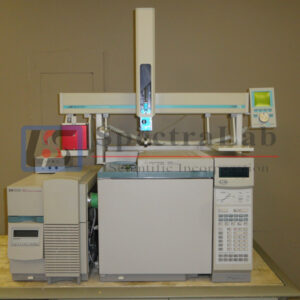
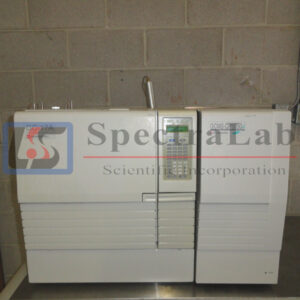
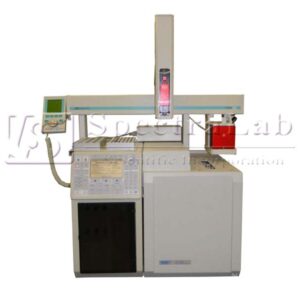
HP 5973 EI/CI MSD G1099A with 6890 Plus GC & CTC Analytics Combi PAL Autosampler
Item ID: RefurbishedIn StockPrice:$25000 USD
-
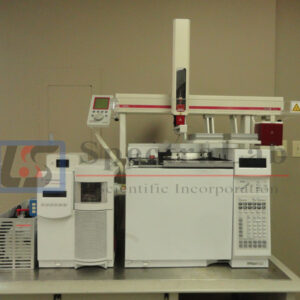
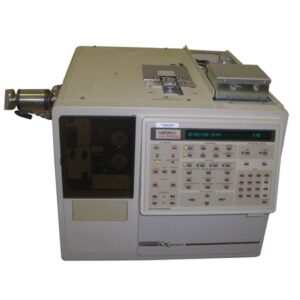
HP 5972 MSD with HP 5890 II GC, HP 7673B Autosampler, Data System and Rough Pump
Item ID: RefurbishedIn Stock
Boiling Range Distribution of Petroleum Fractions
Overview
Petroleum fractions are complex mixtures of hydrocarbons that differ in molecular weight, volatility, and boiling point. Determining the boiling range distribution provides insight into the composition and refining potential of crude oil and its derivatives, such as naphtha, kerosene, diesel, and gas oils. By understanding the proportion of light, middle, and heavy components, refiners can optimize distillation processes, product blending, and yield prediction. Accurate analysis of these analytes also aids in quality control, process monitoring, and compliance with industry standards such as ASTM D2887 and D6352.
Test Methods
Solutions
Gas Chromatography with Flame Ionization Detection (GC-FID) is the standard technique for simulated distillation (SimDist) to determine boiling range distribution in petroleum products. The GC separates hydrocarbons based on volatility under a programmed temperature ramp, while the FID quantifies each fraction according to carbon response. Using a non-polar high-temperature capillary column, the method generates chromatograms that correlate retention time with boiling point via calibration with n-paraffin standards. Automated injection systems ensure reproducibility, and integrated software converts chromatographic data into cumulative boiling curves. GC-FID SimDist provides rapid, precise results compared to traditional distillation, enabling laboratories to evaluate product quality, track refinery efficiency, and meet ASTM or ISO regulatory requirements.
Featured GC-FID
Discover a wide range of lab equipment from top manufacturers at SpectraLab. View all to find more GC-FID equipment!
-
Agilent 6890 GC with FID/ECD or NPD, Agilent G1512A Controller and Agilent 6890 Auto Injector
Item ID: RefurbishedIn Stock -
HP 5890 II GC with Dual FIDs, Split/splitless Inlet and Purged Packed Inlet
Item ID: RefurbishedIn Stock
Boiling Range Distribution of Petroleum Distillate
Overview
Petroleum distillates, including naphtha, kerosene, diesel, and gas oils, are refined fractions separated by their volatility and boiling point characteristics. The boiling range distribution provides a critical measure of product composition, quality, and suitability for downstream applications such as combustion, blending, and refining optimization. Understanding the proportion of light to heavy components helps predict performance properties like flash point, viscosity, and energy content. Precise determination of boiling behavior also supports compliance with ASTM and ISO fuel quality standards and assists in process control for refinery operations.
Test Methods
ASTM D7798-13
ASTM D6352
Solutions
Gas Chromatography with Flame Ionization Detection (GC-FID) is the standard analytical method for determining the boiling range distribution of petroleum distillates through simulated distillation (SimDist). In this technique, the GC separates hydrocarbon molecules by volatility using a non-polar, high-temperature capillary column, while the FID quantifies them based on carbon response. Retention times are calibrated with n-paraffin standards to establish a temperature–boiling point correlation, producing a cumulative boiling curve that represents the distillation profile. Automated injection systems and temperature programming ensure reproducible and precise measurements, while integrated software converts chromatographic data into ASTM-compliant results (e.g., ASTM D2887, D6352). GC-FID SimDist provides rapid, accurate, and reproducible characterization of petroleum distillates—supporting refinery optimization, product specification, and regulatory quality assurance.
Featured GC-FID
Discover a wide range of lab equipment from top manufacturers at SpectraLab. View all to find more GC-FID equipment!
-
Agilent 6890 GC with FID/ECD or NPD, Agilent G1512A Controller and Agilent 6890 Auto Injector
Item ID: RefurbishedIn Stock -
HP 5890 II GC with Dual FIDs, Split/splitless Inlet and Purged Packed Inlet
Item ID: RefurbishedIn Stock
Boiling Range Distribution of Distillates and Oils
Overview
Distillates and lubricating base oils are refined petroleum fractions characterized by their volatility, molecular weight, and hydrocarbon composition. Determining their boiling range distribution provides essential information on product quality, refining efficiency, and suitability for downstream blending or performance applications. Distillates such as diesel, jet fuel, and gas oils typically exhibit moderate volatility, while lubricating base oils contain heavier hydrocarbons with high viscosity and thermal stability. Accurate boiling range data helps predict lubrication performance, oxidation resistance, and energy yield, ensuring product consistency and compliance with industry standards.
Test Methods
Solutions
Gas Chromatography with Flame Ionization Detection (GC-FID) is the preferred technique for determining boiling range distribution in distillates and lubricating base oils through simulated distillation (SimDist). The GC system separates hydrocarbon components according to volatility on a non-polar, high-temperature column, while the FID provides quantitative detection based on carbon response. Calibration with n-paraffin standards establishes a correlation between retention time and boiling temperature, generating precise distillation curves in accordance with ASTM D2887 and D6352 methods. Automated samplers and programmable temperature control ensure reproducible and high-throughput analysis. GC-FID SimDist offers a fast, reliable alternative to physical distillation, providing critical compositional and volatility data for refinery optimization, product specification, and regulatory compliance.
Featured GC-FID
Discover a wide range of lab equipment from top manufacturers at SpectraLab. View all to find more GC-FID equipment!
-
Agilent 6890 GC with FID/ECD or NPD, Agilent G1512A Controller and Agilent 6890 Auto Injector
Item ID: RefurbishedIn Stock -
HP 5890 II GC with Dual FIDs, Split/splitless Inlet and Purged Packed Inlet
Item ID: RefurbishedIn Stock
Boiling Point Distribution of Hydrocarbon Solvents
Overview
Hydrocarbon solvents, such as hexane, heptane, toluene, and mixed aliphatic or aromatic blends, are commonly used in coatings, cleaning, extraction, and chemical synthesis. Their performance depends strongly on volatility and compositional uniformity, both governed by the boiling point distribution. Determining this distribution allows for classification of solvent grades, control of evaporation rates, and verification of product purity. Accurate analysis ensures consistency across manufacturing batches and compliance with specifications for industrial, laboratory, and environmental applications.
Test Methods
Solutions
Gas Chromatography with Flame Ionization Detection (GC-FID) is the standard method for determining the boiling point distribution of hydrocarbon solvents through simulated distillation (SimDist). The GC separates solvent components by volatility on a non-polar capillary column, while the FID quantifies each fraction based on carbon response. Calibration with n-paraffin standards establishes a relationship between retention time and boiling temperature, enabling the generation of precise boiling curves in accordance with ASTM D2887 or D3710. Automated injection systems and temperature-programmed ovens ensure reproducible separations, while integrated software converts chromatographic data into detailed distillation profiles. GC-FID provides rapid, accurate, and repeatable characterization of solvent volatility—supporting quality control, formulation development, and compliance with industrial performance standards.
Featured GC-FID
Discover a wide range of lab equipment from top manufacturers at SpectraLab. View all to find more GC-FID equipment!
-
Agilent 6890 GC with FID/ECD or NPD, Agilent G1512A Controller and Agilent 6890 Auto Injector
Item ID: RefurbishedIn Stock -
HP 5890 II GC with Dual FIDs, Split/splitless Inlet and Purged Packed Inlet
Item ID: RefurbishedIn Stock
Aromatic Hydrocarbons in Middle Distillates
Overview
Middle distillates, such as kerosene, jet fuel, and diesel, contain varying proportions of aromatic hydrocarbons that significantly influence combustion properties, lubricity, and emission characteristics. The main aromatic types—mono-, di-, and tri-aromatics—affect parameters like smoke point, density, and energy content. Determining the concentration and distribution of these aromatic species is crucial for assessing fuel quality, refining efficiency, and regulatory compliance (e.g., ASTM D1319 or D6379). Accurate quantification helps ensure consistent product performance and adherence to environmental standards.
Test Methods
ASTM D6591
Solutions
High-Performance Liquid Chromatography with Refractive Index Detection (HPLC-RI) is a precise and reliable method for separating and quantifying aromatic hydrocarbon types in middle distillates. The HPLC system uses a polar-modified silica or amino column with a non-polar mobile phase to achieve separation based on aromatic ring structure and polarity differences. The refractive index detector provides a universal response suitable for compounds without strong UV absorbance, making it ideal for complex hydrocarbon mixtures. Automated injection and temperature control ensure repeatable analyses, while data processing software quantifies mono-, di-, and tri-aromatic fractions. Compared to traditional fluorescent indicator adsorption (FIA) methods, HPLC-RI offers improved resolution, reproducibility, and environmental safety—supporting refinery quality control and compliance with global fuel specifications.
Featured HPLC-RI
Discover a wide range of lab equipment from top manufacturers at SpectraLab. View all to find more HPLC-RI equipment!
-
HP 5973 EI/CI MSD G1099A with 6890 Plus GC & CTC Analytics Combi PAL Autosampler
Item ID: RefurbishedIn StockPrice:$25000 USD
Benzene in Hydrocarbon Solvents
Overview
Benzene is a volatile aromatic compound often present as a trace contaminant in hydrocarbon solvents such as toluene, xylene, and hexane. Even at very low levels, benzene poses serious health and safety concerns due to its toxicity and carcinogenic nature. Monitoring benzene concentration in solvents is therefore essential for ensuring product purity, regulatory compliance, and worker safety in chemical manufacturing, laboratory, and industrial applications.
Test Methods
ASTM D6229-06
Solutions
Gas Chromatography with Flame Ionization Detection (GC-FID) is a highly sensitive and accurate technique for measuring trace levels of benzene in hydrocarbon solvents. The GC separates benzene from other components based on their volatility and interaction with the column, while the FID detects organic compounds through ionization in a hydrogen-air flame. This combination provides excellent selectivity, low detection limits, and reproducible quantification. With proper calibration and high-purity carrier gases, GC-FID offers a dependable solution for quality control and trace contaminant analysis in petroleum and chemical products.
Featured GC-FID
Discover a wide range of lab equipment from top manufacturers at SpectraLab. View all to find more GC-FID equipment!
-
HP 5973 EI/CI MSD G1099A with 6890 Plus GC & CTC Analytics Combi PAL Autosampler
Item ID: RefurbishedIn StockPrice:$25000 USD
SpectraLab Scientific Inc
Established in 2003,
SpectraLab Scientific is a global leader of Refurbished analytical equipment. We specialize in reconditioning equipment, integrating the best available technologies from leading manufacturers across the industry. We are committed to quality and service, delivering strong customer satisfaction. We stock over 10,000 pre-owned lab equipment, components, and mix-and-match parts for your systems.